
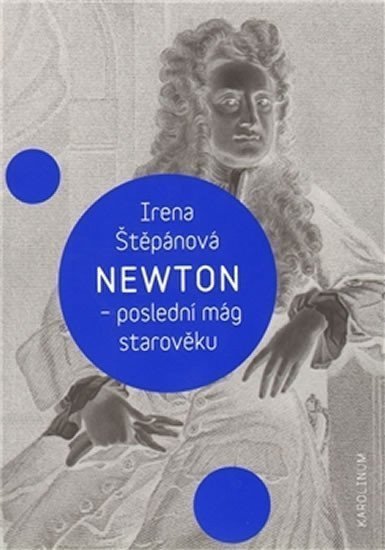

Description
In 1936, when the majority of Newton's never-before-published manuscripts were auctioned at Sotheby's, the entire scientific world was almost petrified with astonishment. It turned out that Newton's writings in the fields of physics and mathematics, previously considered the foundation of modern science, actually constitute only a small fraction of what Newton wrote during his lifetime. The vast majority of his work dealt with theology and alchemy. One of the main auctioneers of Newton's manuscripts, John Maynard Keynes, remarked that Newton was not so much the founder of the Age of Reason, but rather the last sprout of ancient wisdom. Undoubtedly: Newton's lifelong intention was to explore God, and this in two fundamental aspects: in the realm of God's word (the Bible) and God's work (the created world). And Newton considered himself a priest-scientist, merely a restorer of the forgotten ancient wisdom, prisca sapientia. According to our findings, modern European science is enabled by Newton's conception of God, which is a conditio sine qua non for it. According to Isaac Newton, it is God Himself who reveals Himself in everything and who, in the specific phenomena of this world, always assumes only certain values from all possible values, hidden in His spiritual dimension. However, this conception of God does not stem from...
Information
Author: Štěpánová Irena
Language: Czech
Publication date: March 1, 2012
Manufacturer: Nakladatelství Karolinum
Genres: Non-fiction literature, Books, Esotericism and spirituality
Type: Paperback book
Pages: 192
ISBN/EAN: 9788024620619