

Description
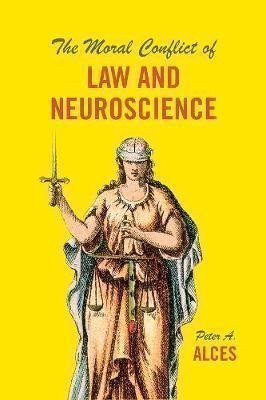
Law relies on the idea that people can make their own choices and are morally responsible for the consequences. But what if that is not the case? Over the past half-century, law has developed a more acute understanding of the human condition, especially the workings of the brain. It already considers certain cognitive realities when assessing agency and responsibility, including age, sanity and emotional distress. As new neuroscientific research increasingly calls the very idea of free will into question, how should the law respond? Peter A. Alces examines where and how the law currently fails to account for the neuroscientific possibility that humans may lack normative free will in important ways and therefore may not possess moral responsibility. Criminal law offers the most accessible context for considering neuroscience’s potential impact, since it already exposes the naivety of much normative reasoning, including the inconsistent treatment of people with equally disadvantageous congenital or acquired cognitive deficits. Tort and contract law likewise rely on a flawed conception of human agency and responsibility. Alces reveals contradictions within existing legal doctrine and concludes by considering what would be involved in constructing new legal regimes based on emerging neuroscientific insights.
Information
Author: Alces Peter A.
Language: English
Publication date: February 20, 2018
Genres: English literature, Books, Foreign language books, Books on science in english, Non-fiction literature in english
Type: Paperback book
Pages: 368
ISBN/EAN: 9780226513539